Characteristic Curves
One frame of a portrait clip swept from clean baseline to full melt across six control-resistance drive indices. A family of curves for a bend instrument: where the picture breaks, and how little of the dial that takes.
A transistor datasheet plots a family of curves: hold the device steady, step one input, record what the output does. The same document can be written for a bend instrument. Here the device under test is a composite-video glitch circuit, the swept input is the drive current into the light-dependent cells that set its control resistance, and the output is whatever survives to the CRT. The test signal is a single paused frame of a portrait clip. Everything below is the same frame; only the drive index changes.
 CR 000 — Clean baseline. The portrait clip intact: a face against a chain-link fence, filmed off the CRT with its scanline structure and a cool green cast, but geometrically whole. Zero drive is the only index that looks like this.
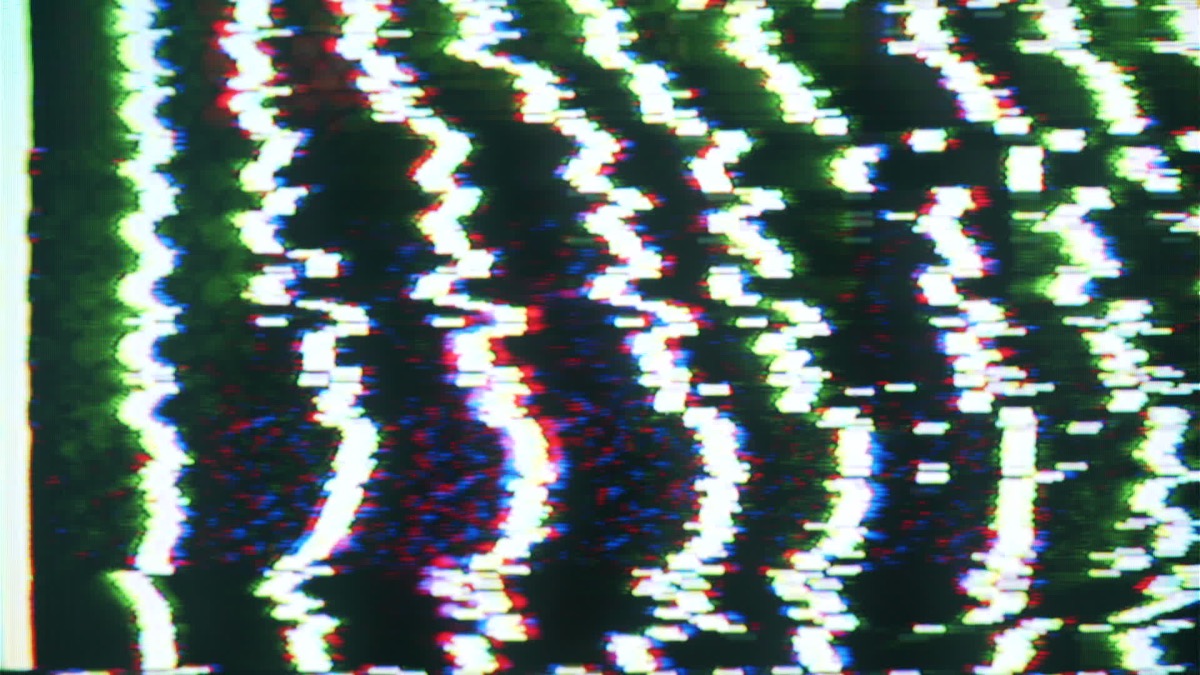 CR 008 — The picture is already gone. Horizontal sync has collapsed; the frame reorganizes into bright wavy vertical ribbons with red and blue fringes over a dark green field. Between 000 and 008 the entire transition happened.
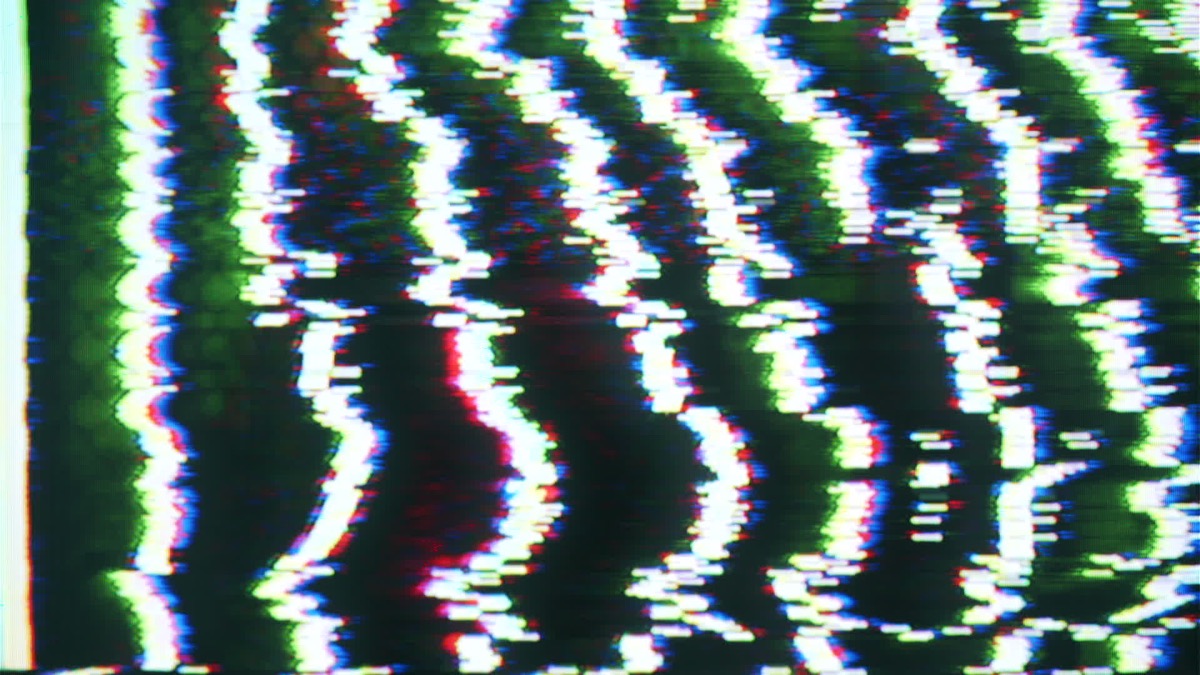 CR 024 — Same ribbon structure, slightly thickened, with heavier color separation at the edges and stronger green retained along the left of the frame.
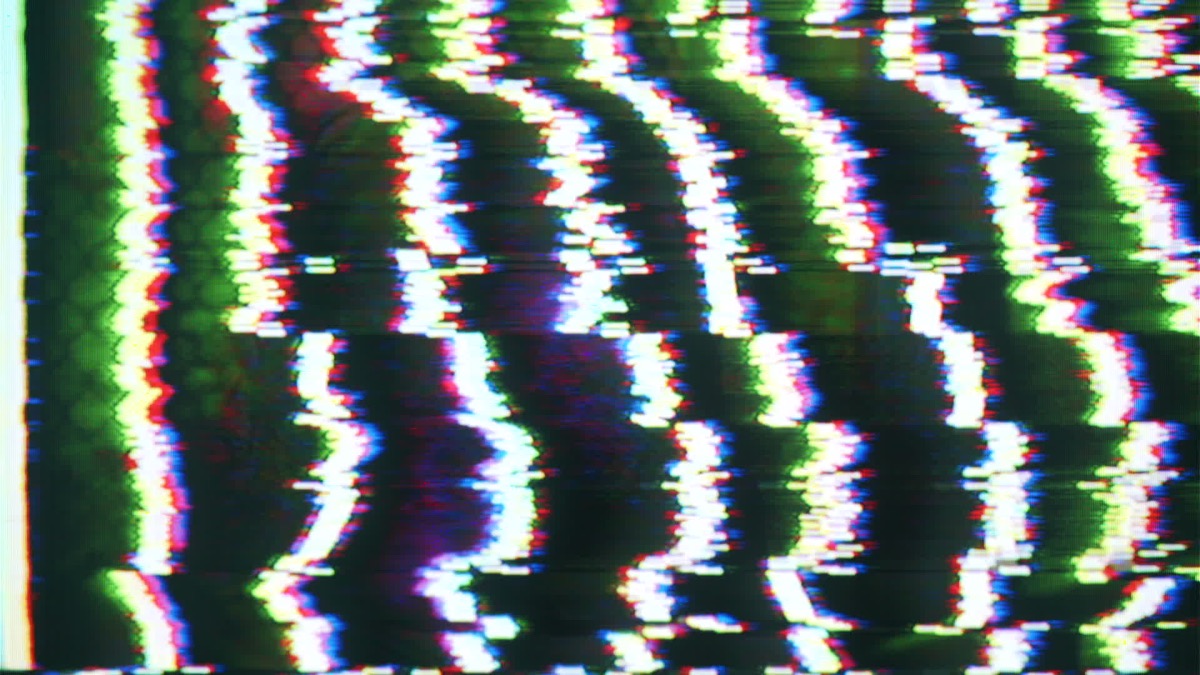 CR 060 — Red and yellow fringing intensifies and magenta pockets open in the dark regions. The ribbons wander more; the frame is a slow morph of 008, not a new state.
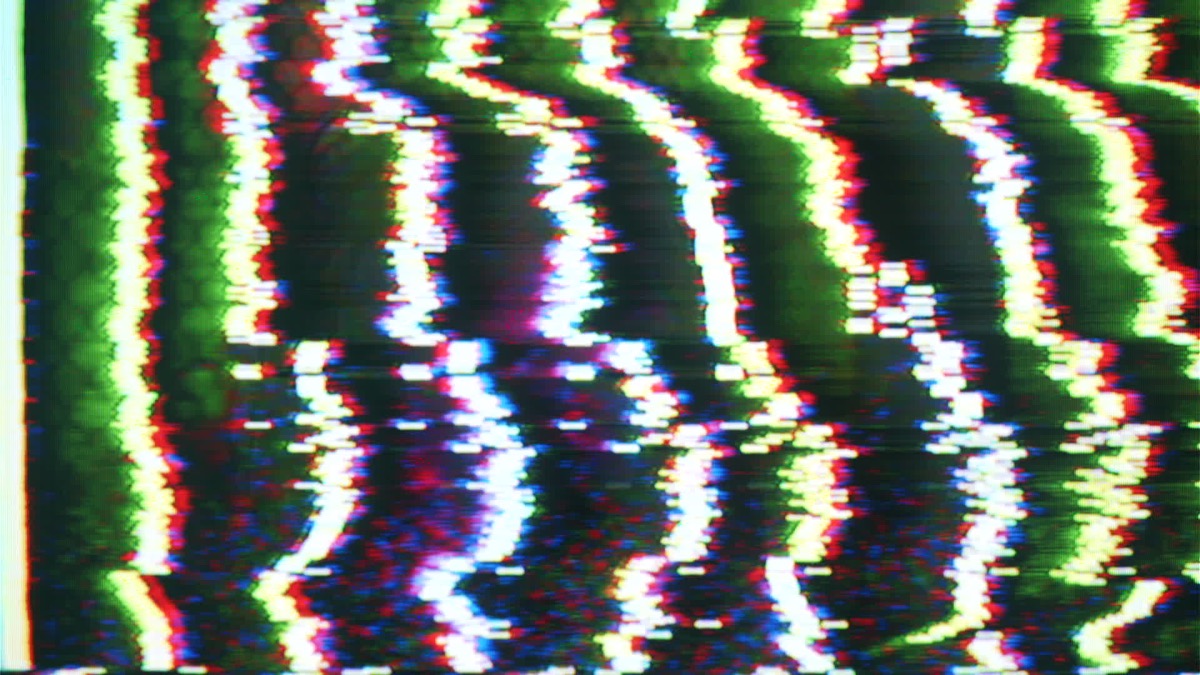 CR 120 — Broad green fields reassert between ribbons and a purple region develops center-left. More energy, same species of destruction.
 CR 220 — Maximum drive. Densest ribbon count, heavy red fringing, horizontal tearing dashes throughout. Visibly wilder than 024, but a difference of degree, not of kind.
Two regimes
The sweep resolves into two regions. First, a narrow onset band at the very top of the drive range, where the signal crosses from intact to broken. Second, a long sustained wavy-band regime — RGB-separated ribbons, sync gone — that occupies everything past the onset and only morphs gradually as drive increases; index 008 and index 220 are recognizably the same behavior at different intensities.
The consequence is plain in the figures: five of the six curves document one regime. The expressive action — where a small change in control resistance produces a large change in output, and where the device has been observed to hold more than one state at a single setpoint — is concentrated in the onset band. That narrow door, not the melt beyond it, is the interesting territory, and it is where the instrument gets played.