LSD+
coming soonA hand-built glitch instrument for composite video. No two enclosures match.
I build these one at a time. L/S/D+ sits in a composite video path and disturbs the signal on its way to the screen [DRAFT: signal-path specifics pending — what each control section does will be documented here]. Each enclosure gets its own hand-drawn panel finish and its own backlight color, so the unit you receive exists in exactly one copy.
How it works
Most glitch chains destroy the part of the signal that tells a display where the picture starts — and the image rolls, tears, or drops out entirely. L/S/D+ is built around keeping that from happening.
source ──▶ [ L/S/D+ : pull clean sync · buffer ] ──▶ your glitch chain
                          │                                │
                          │ clean sync held                │ do your worst
                          ▼                                ▼
your display ◀── [ re-inject clean sync · mix ] ◀──── glitched return
It pulls clean sync from your source video, buffers it, and sends a copy of the clean video out to your glitch chain. You do your glitchery and send it back. On the way out, L/S/D+ re-injects the clean sync and mixes the glitched signal back in by division — a non-parallel divide, not a standard wet/dry mix. [DRAFT: the divide-mix explanation gets tightened with the owner — this is the short version.] The stages have on/off triggers, so the whole thing is playable, not just set-and-forget.
The result: the picture can be as destroyed as you want, and the display still knows where every line begins. Why that matters is its own subject — see Composite sync, explained.
Panel
What is physically on the box:
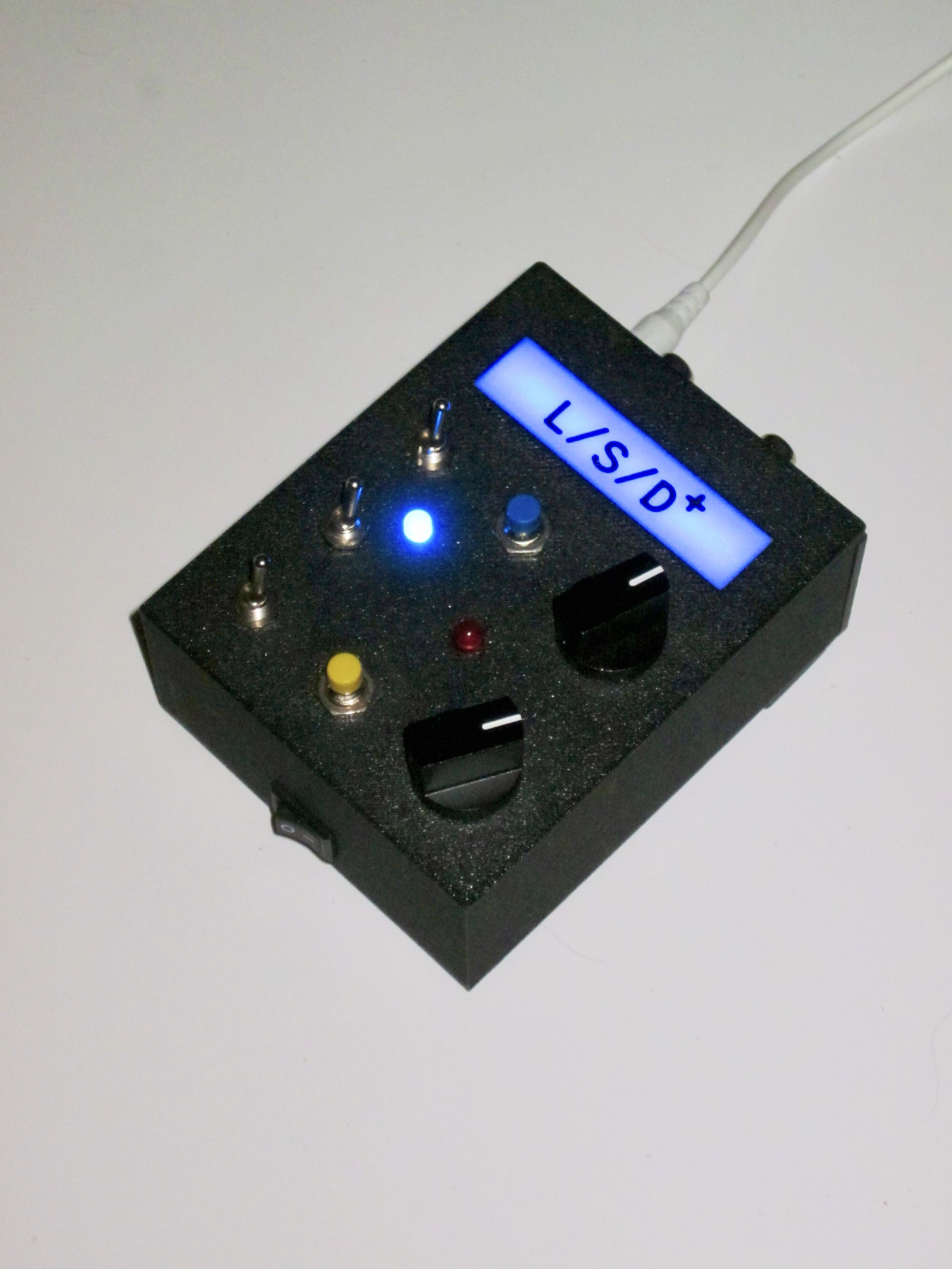
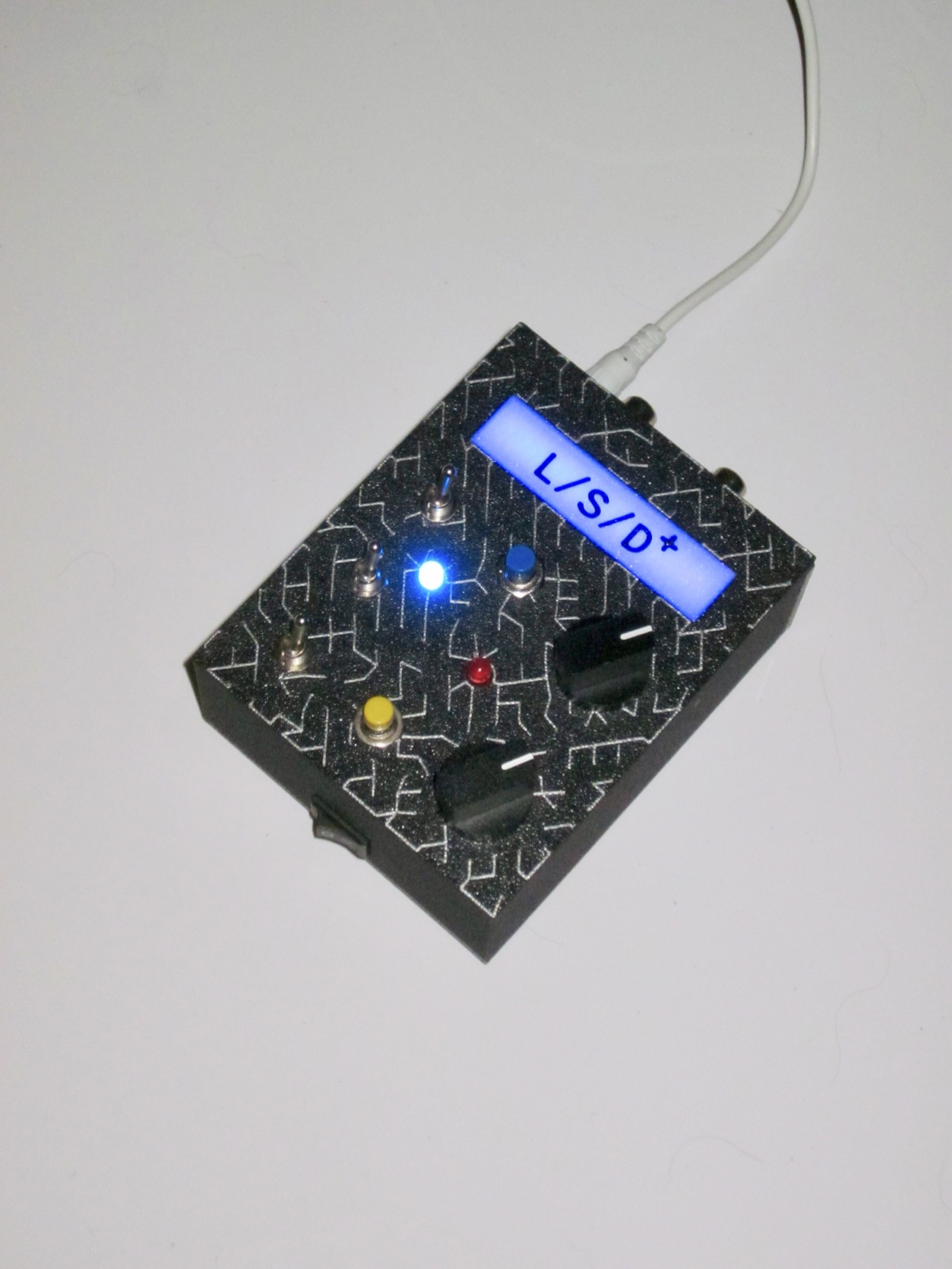
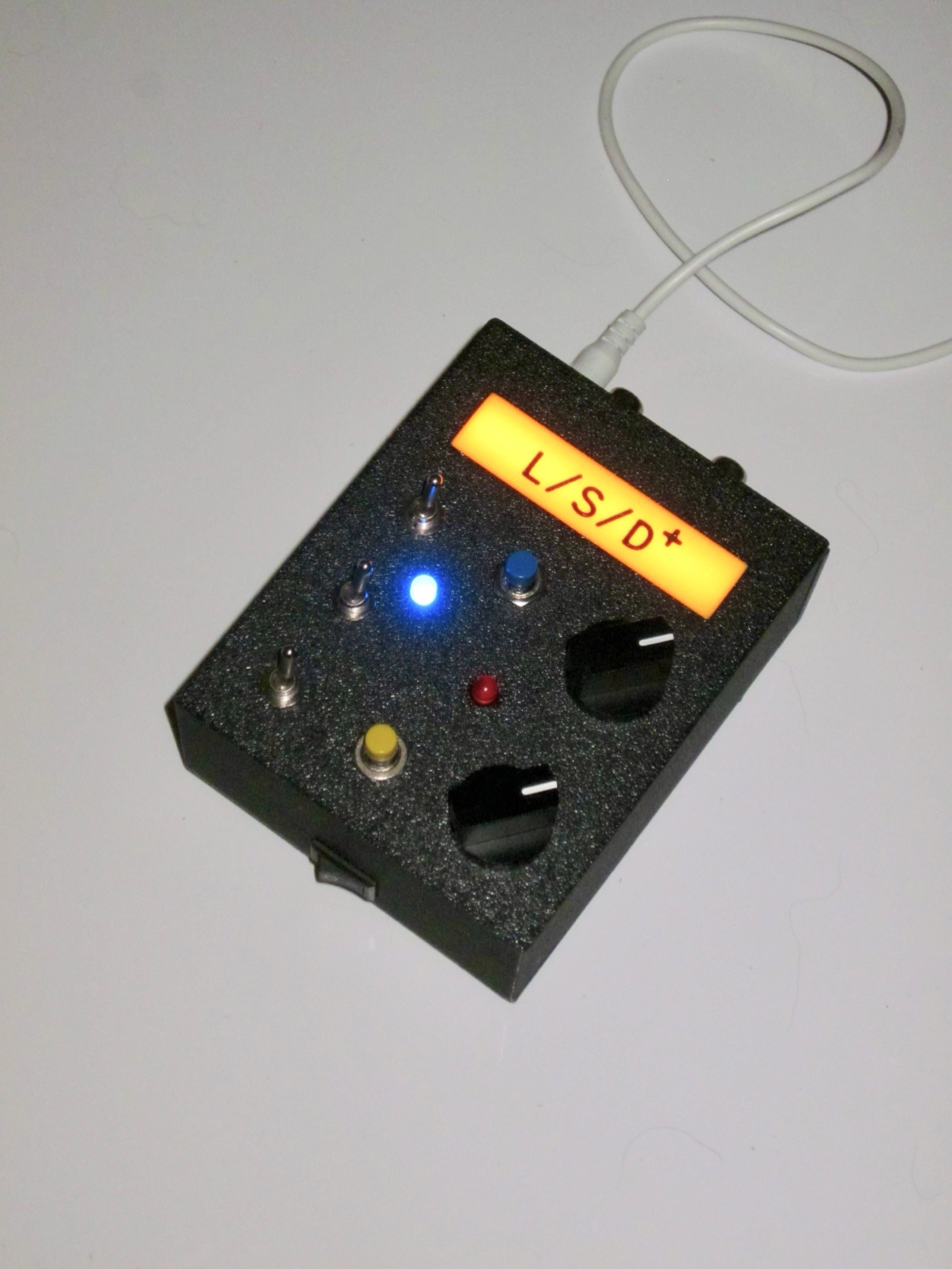
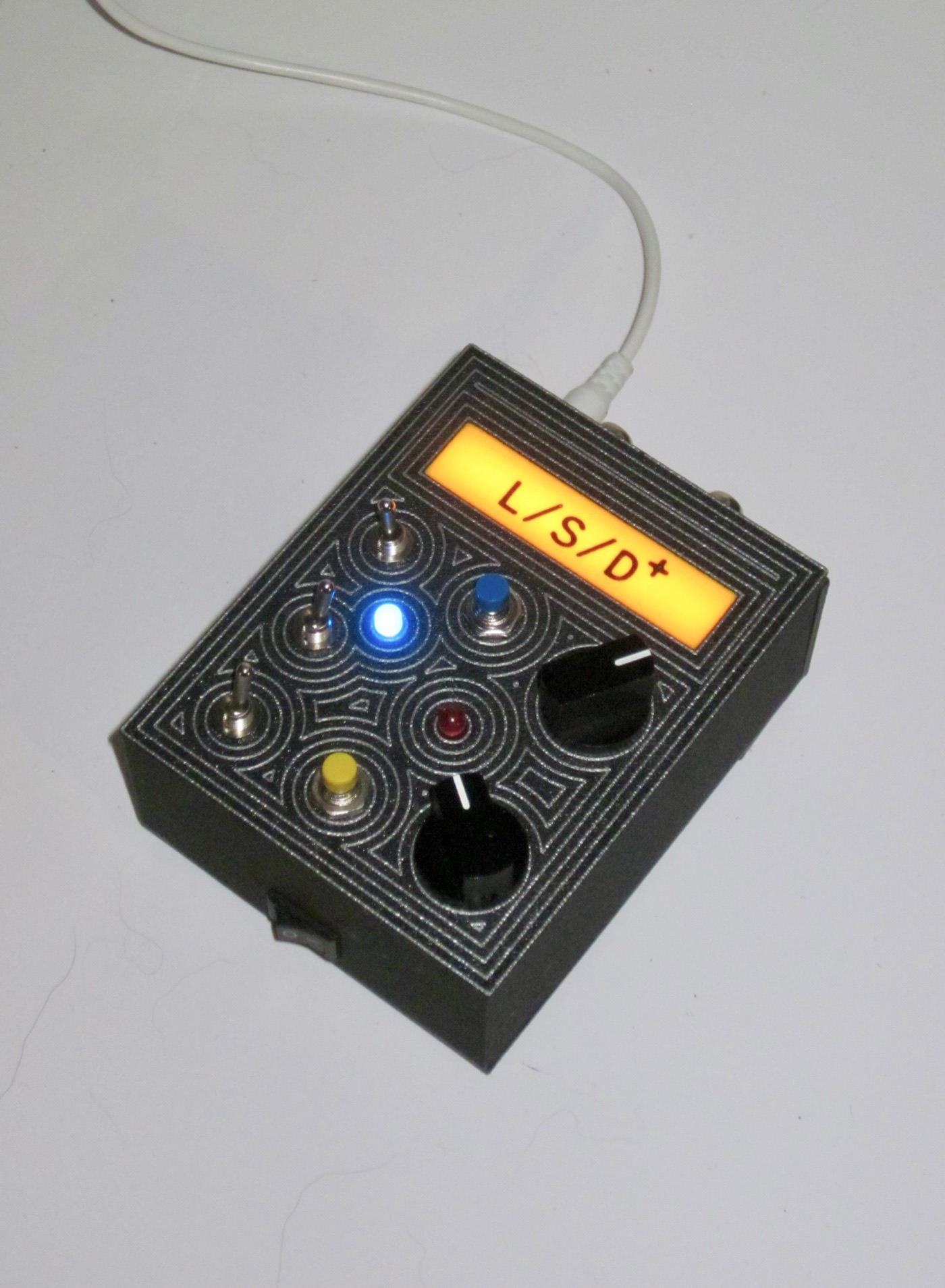
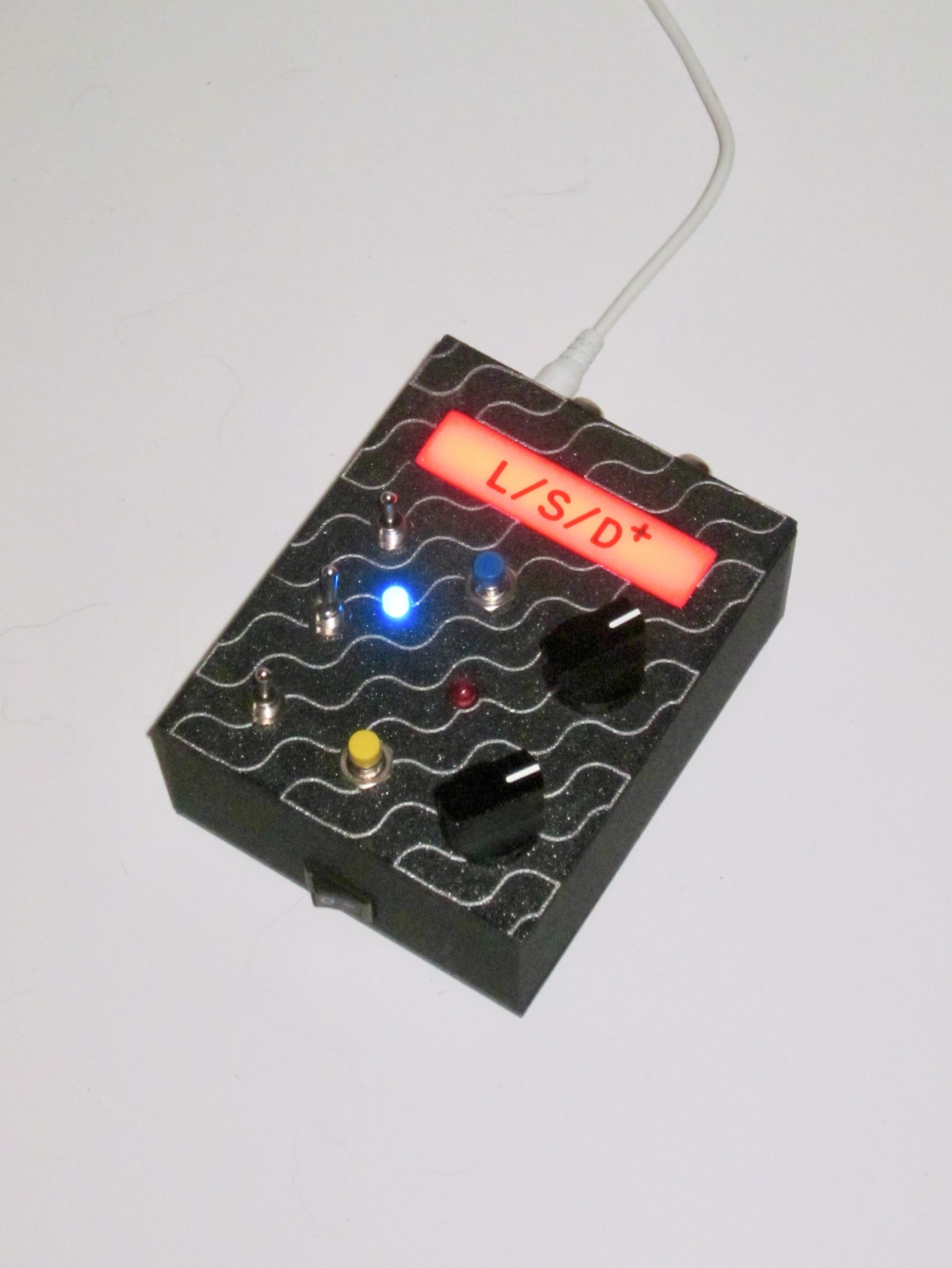
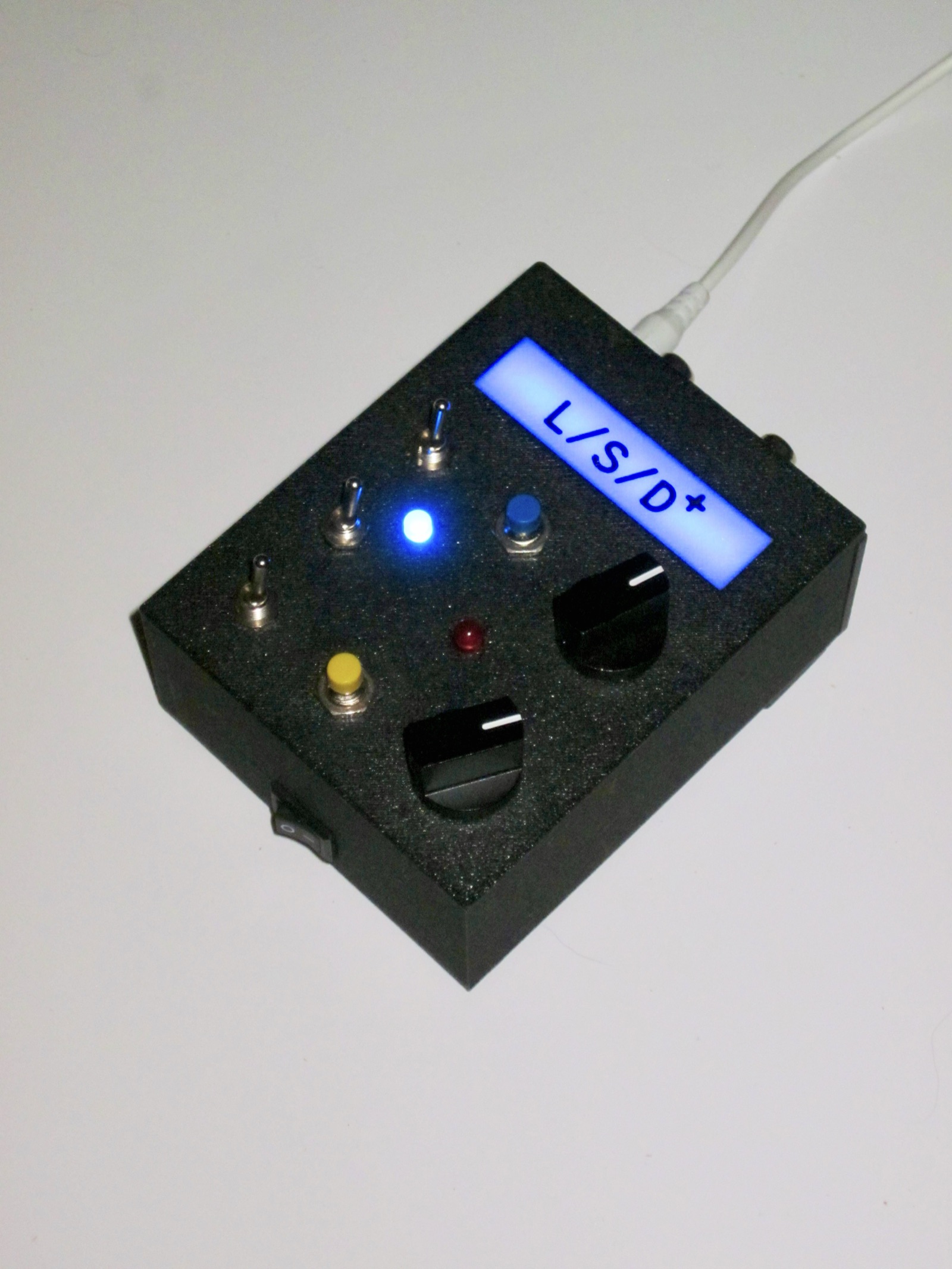
- Backlit L/S/D+ window. Backlight color varies unit to unit — blue, amber, red, and warm white have all left the bench.
- Three bat-handle toggle switches, chrome, in a diagonal row.
- Two momentary pushbuttons, blue and yellow.
- Two rotary knobs. Most units carry black pointer knobs; some carry numbered 0–10 dial knobs. [DRAFT: parameter names pending]
- Two indicator LEDs, blue and red.
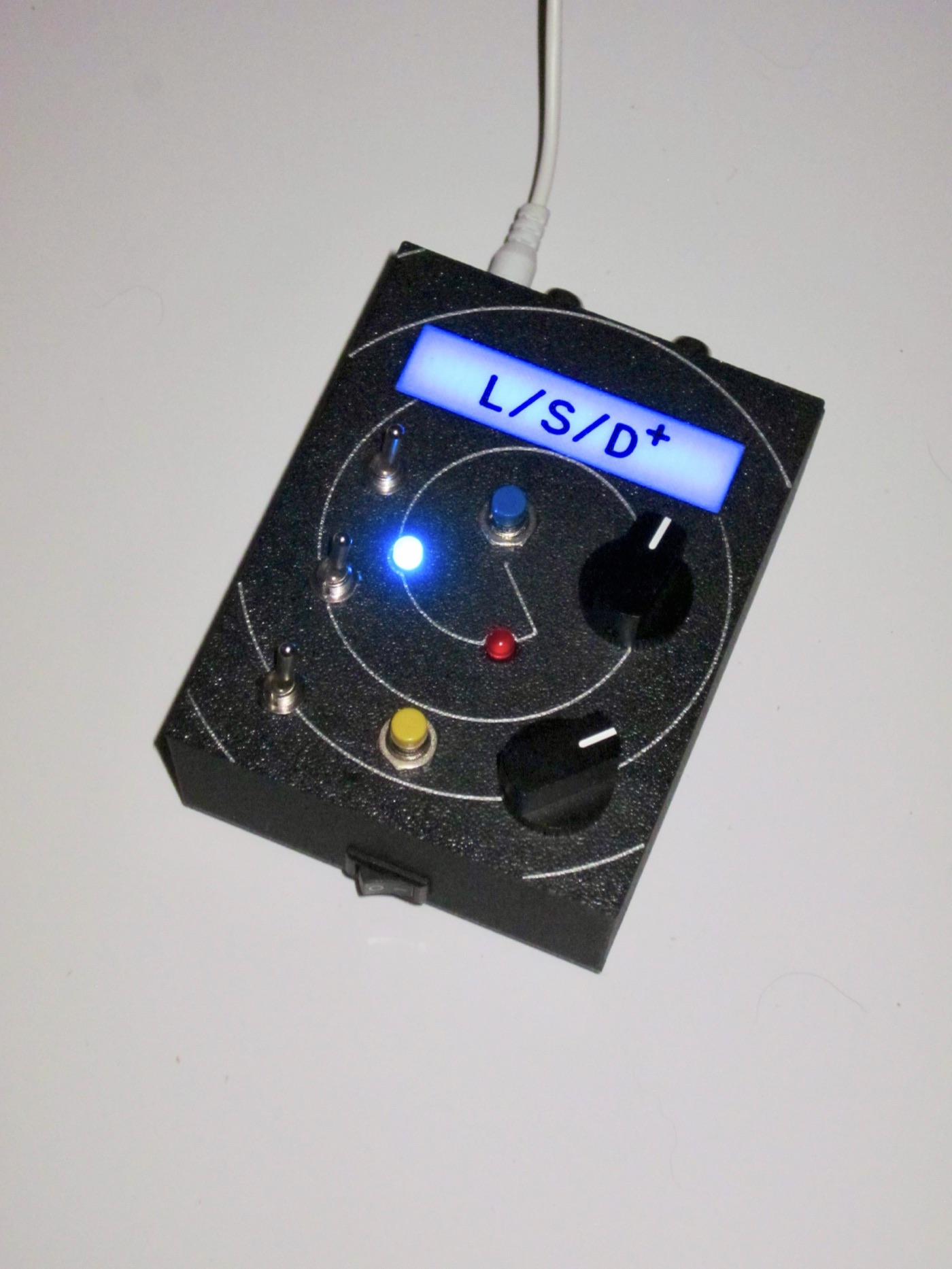
- Side-mounted rocker for power.
- Rear edge: barrel jack for DC power and two RCA jacks for the video path [DRAFT: in/out assignment to be confirmed].
The top panel of every unit is finished by hand — spirals, orbit rings, waves, concentric line work. The pattern is drawn once and not repeated.
Plates
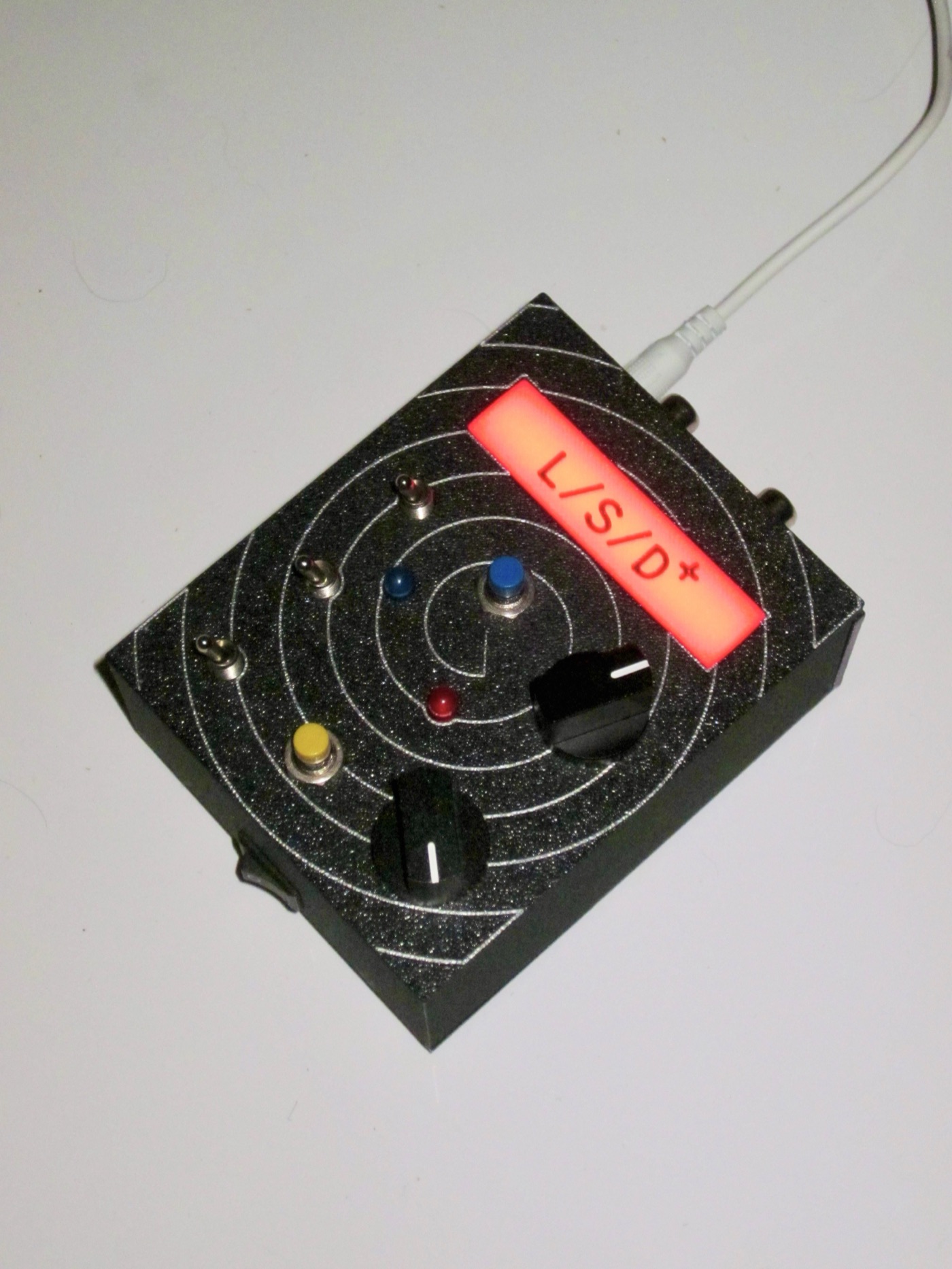 PLATE 2 — Orbit-ring finish, red backlight; power and RCA jacks visible on the rear edge.
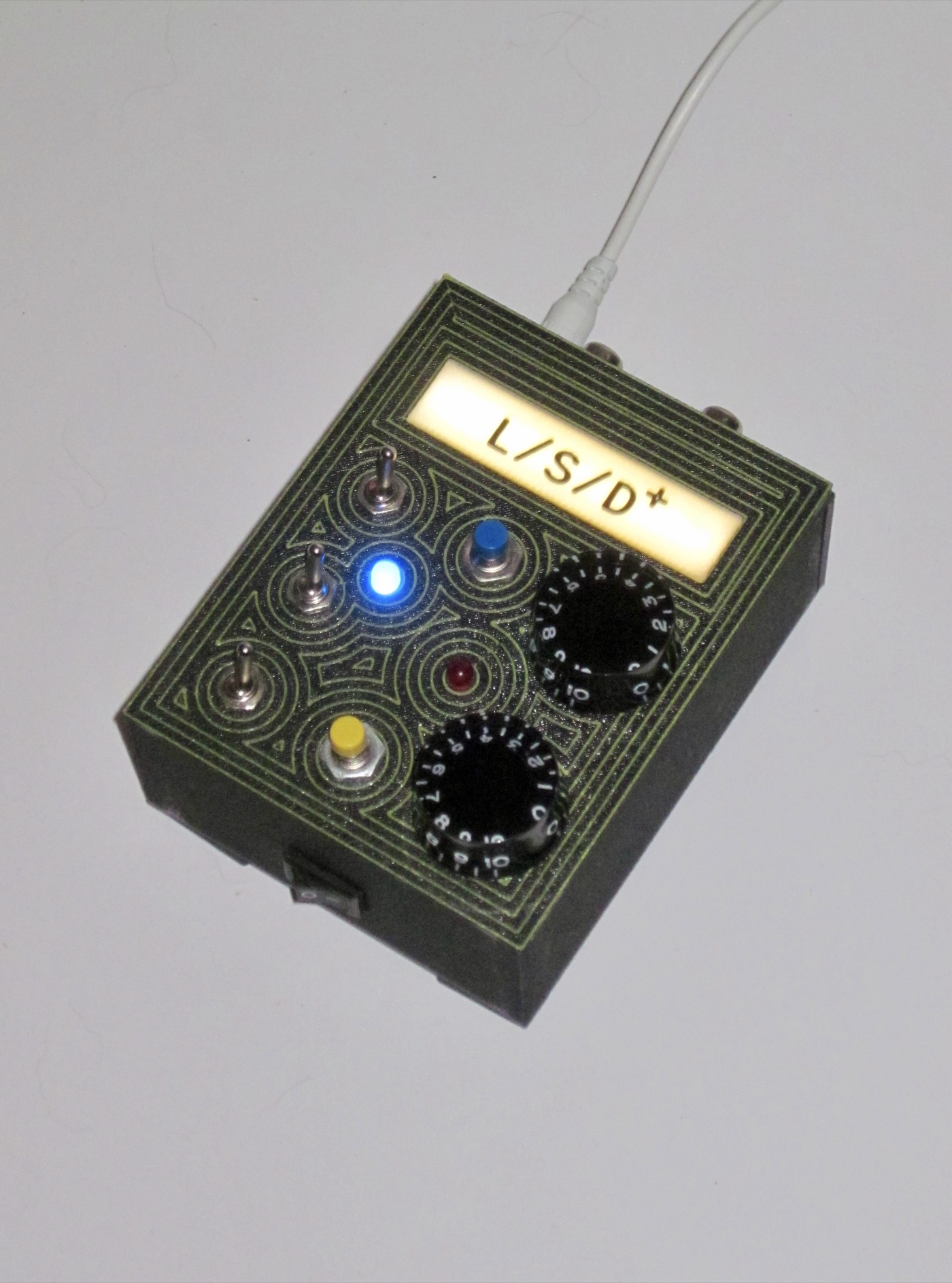 PLATE 3 — Concentric line finish with numbered 0–10 dial knobs, warm white backlight.
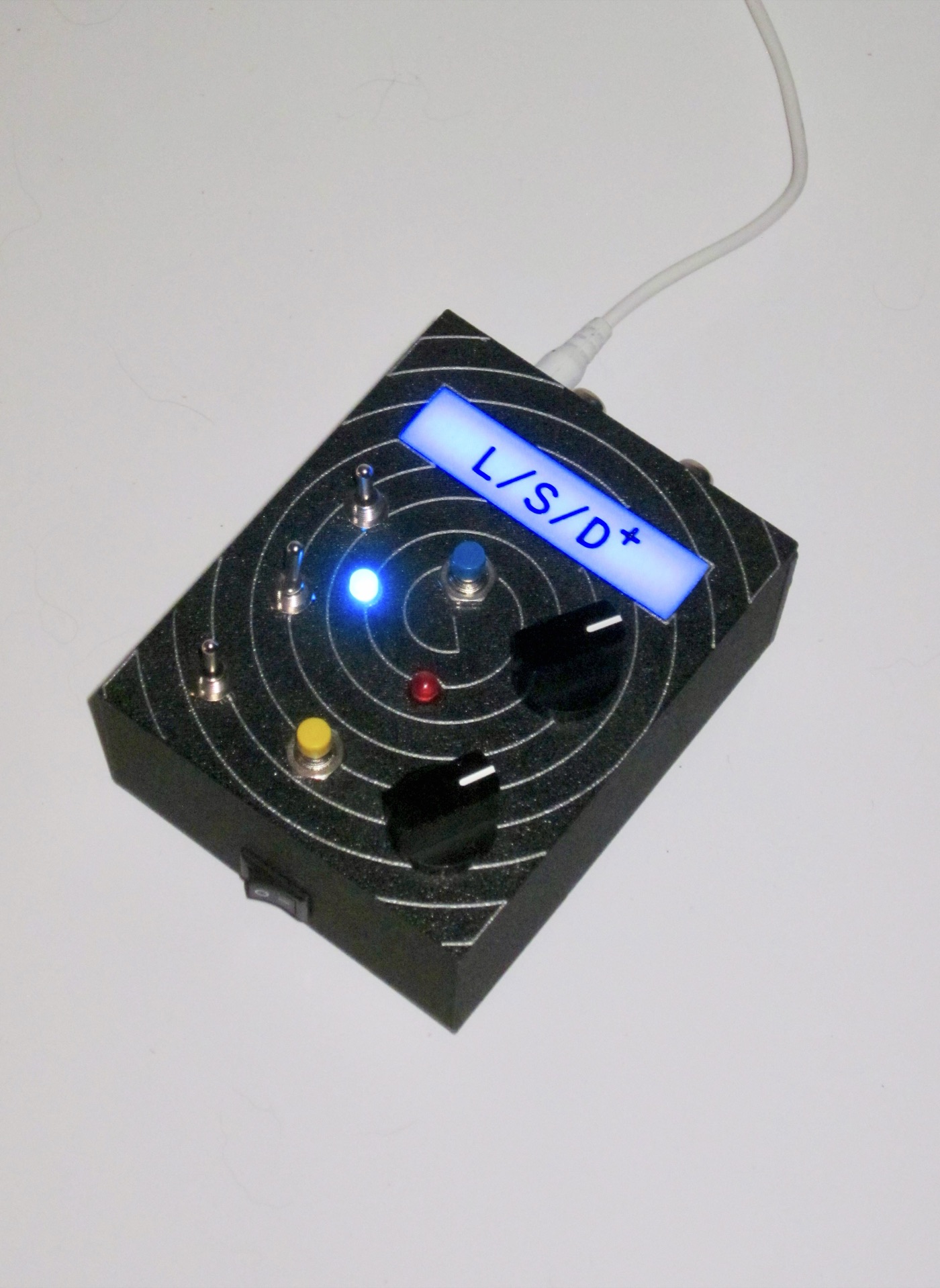 PLATE 4 — Spiral finish, blue backlight; side power rocker in view.
Specifications
| Item | Value |
|---|---|
| Video I/O | 2× RCA, composite video [DRAFT: in/out assignment + pass-through behavior] |
| Signal format | Composite — NTSC and PAL |
| Power | External DC via barrel jack; side rocker switch [DRAFT: voltage + polarity] |
| Enclosure | Textured black box, hand-finished one-of-one panel artwork |
| Controls | 3 toggles, 2 pushbuttons, 2 rotary knobs |
| Indicators | Backlit L/S/D+ window (color varies by unit), 2 LEDs |
| Dimensions | [DRAFT] |
Availability
Built by hand in numbered series of ten to twenty units. Each unit is listed below individually; when one sells it stays on the page, marked sold — the grid is the ledger. When a new series is ready, it appears at the top. [DRAFT: series cadence + current-series status pending the owner’s ledger.]
Units
Each unit is finished by hand and exists in one copy. Sold units stay on this page — they are the catalog.
[DRAFT — serials, statuses and availability below are placeholders pending the owner's ledger; photos are the units themselves.]